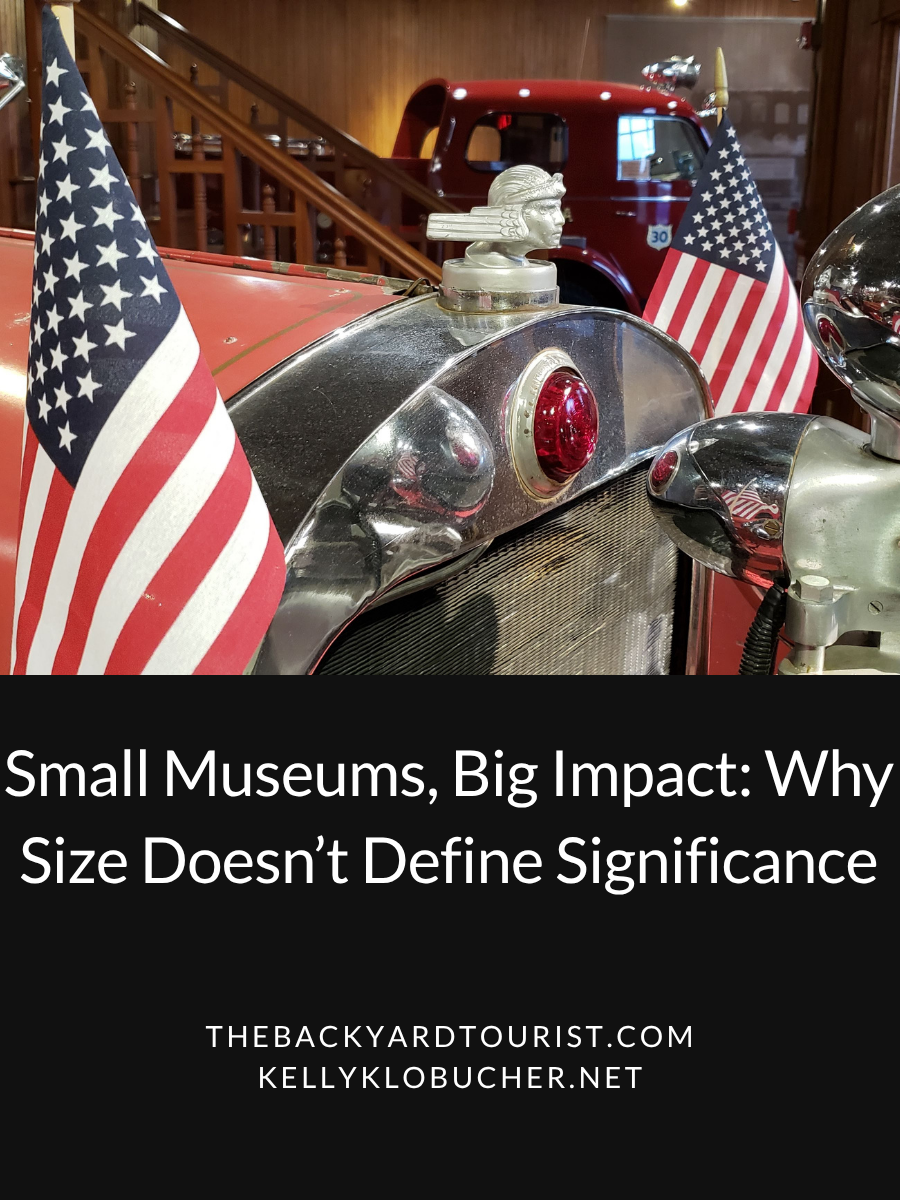

Kelly Klobucher April 22, 2026
3 min read
Exploring how museums, cultural travel, and storytelling shape communities and economic growth
Despite their impact, small museums often face significant challenges, including limited funding and staffing. Supporting these institutions is essential — not only for preserving history, but for sustaining the communities they represent.
A few of my favorite examples:
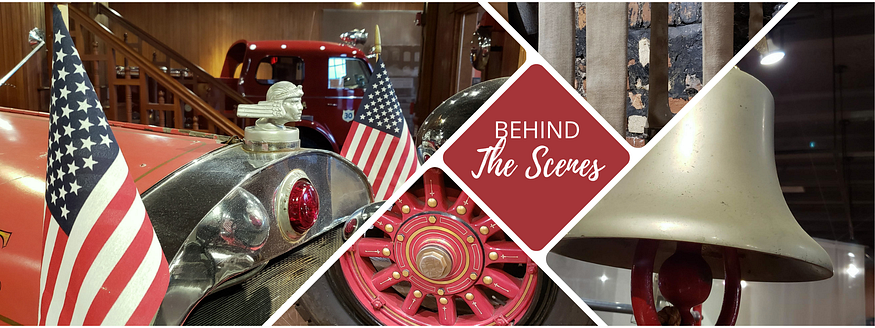
Tucked along the Fox River in Aurora, IL, the Aurora Regional Fire Museum has quietly redefined what a small museum can be. While its beautifully preserved historic fire engines still draw visitors in, the institution has expanded its mission far beyond showcasing equipment and the evolution of firefighting. Today, it serves as an active community safety hub — delivering hands-on education about fire prevention, emergency preparedness, and life-saving response strategies for families and children. Through strategic partnerships and grant funding, the museum has also moved into direct service, distributing smoke detectors and carbon monoxide alarms to local residents who need them most. In doing so, it bridges past and present in a meaningful way — using history not just to inform, but to protect lives right now.
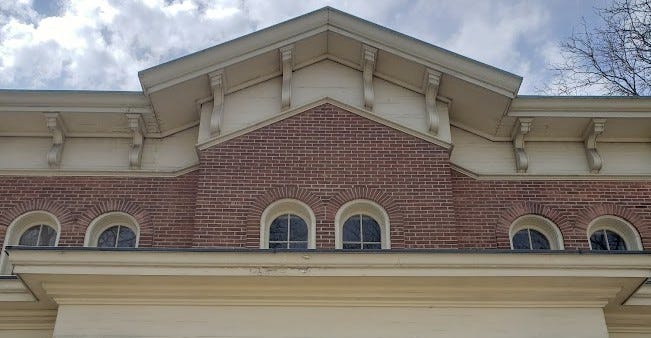
Rooted in the legacy of Jane Addams, the Jane Addams Hull-House Museum has evolved far beyond the expectations of a traditional historic house museum. Rather than simply preserving rooms and artifacts, it actively carries forward Hull-House’s founding mission of social reform by serving as a dynamic civic space on the campus of University of Illinois Chicago. Through exhibitions, public programs, and community partnerships, the museum engages directly with contemporary issues such as immigration, labor rights, gender equity, and housing justice — inviting visitors not just to learn history, but to participate in ongoing dialogue and action. In this way, it transforms interpretation into impact, positioning itself as both a steward of the past and a catalyst for community engagement in the present.
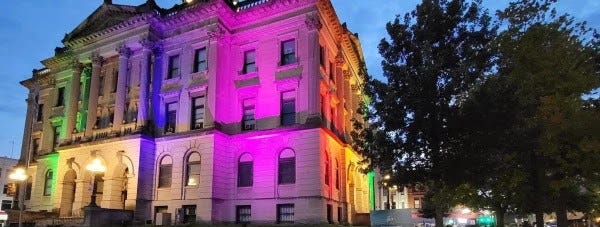
At the heart of downtown Bloomington, the McLean County Museum of History has positioned itself as far more than a repository of artifacts — it is an active civic partner invested in the well-being and identity of its community. Through initiatives like free admission days, inclusive storytelling projects, and collaborations with local schools and cultural organizations, the museum works to ensure that history is accessible, relevant, and representative. Its programs often invite residents to share their own stories, preserving contemporary voices alongside the past, while public events and discussions create space for dialogue around local issues. By blending preservation with participation, the museum reinforces its role as a gathering place where community history is not just interpreted, but continually created.
What ties these examples together is a fundamental shift: museums are moving from interpreting social issues to participating in solutions. Whether through advocacy, education, partnerships, or direct service, they are redefining their role — not just as keepers of history, but as active agents in community care.
Small museums remind us that significance is not measured by size. It is measured by the depth of connection they create and the stories they ensure are not forgotten.
Kelly Klobucher is a museum executive and cultural tourism strategist focused on audience growth, heritage preservation, economic development, and community storytelling.
 Kelly Klobucher | Museum Executive | Cultural Tourism Strategist | Non-Profit Leader
Leave a comment