
Illinois has long stood at the center of LGBTQ+ history in America.
From early gay rights activism in Chicago to nationally significant archives preserving queer culture, the state offers travelers a chance to experience history through museums, libraries, memorials, and public spaces dedicated to telling stories too often left out of traditional narratives.
These places are more than attractions. They are acts of preservation — spaces that ensure generations of struggle, creativity, resilience, and joy are not forgotten.
Whether you are planning a cultural road trip through Chicago or seeking meaningful heritage destinations across Illinois, these LGBTQ+ museums and history sites deserve a place on your itinerary.
The Legacy Walk — Chicago
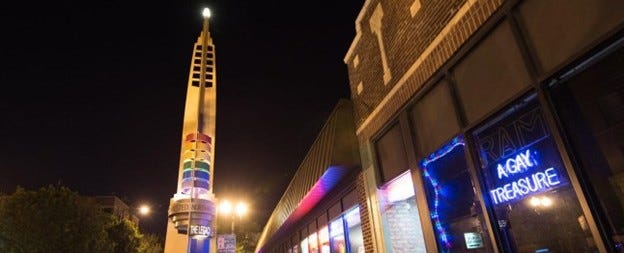
Perhaps the most unique LGBTQ+ history experience in Illinois is The Legacy Walk, an outdoor museum stretching along North Halsted Street in Chicago’s North Halsted neighborhood.
Often described as the world’s only outdoor LGBTQ+ history museum, the walk features dozens of bronze memorial plaques honoring influential LGBTQ+ figures from around the world. Writers, activists, artists, scientists, athletes, and civil rights leaders are commemorated along a half-mile stretch of rainbow pylons that transform an ordinary city street into a living history exhibit.
What makes the Legacy Walk especially powerful is its accessibility. History is not tucked behind admission gates or hidden in archives — it exists openly in public space, inviting anyone walking through the neighborhood to engage with stories that shaped culture and civil rights movements worldwide.
For many visitors, the experience feels both celebratory and deeply personal. It is a reminder that LGBTQ+ history is not separate from American history — it is American history.
Leather Archives & Museum — Chicago

Tucked into Chicago’s Rogers Park neighborhood is one of the most unexpected and internationally important museums in Illinois.
Founded in 1991 during the AIDS crisis, the Leather Archives & Museum was created to preserve the history of leather, fetish, BDSM, and kink communities — cultures that were often misunderstood, stigmatized, or erased altogether.
The museum houses artwork, photography, rare publications, club memorabilia, oral histories, and archival collections documenting LGBTQ+ subcultures that played a major role in queer identity and activism throughout the twentieth century.
While the subject matter may surprise some visitors, the museum’s broader mission is deeply rooted in preservation and historical memory. Like all great museums, it asks visitors to consider whose stories society chooses to save — and whose stories it overlooks.
For cultural travelers interested in hidden history and undertold stories, this is one of the most fascinating museum experiences in Illinois.
Gerber/Hart Library and Archives — Chicago
Part archive, part research center, part community institution, the Gerber/Hart Library and Archives preserves one of the Midwest’s most significant collections of LGBTQ+ history.
Founded in 1981, the archive contains thousands of books, periodicals, photographs, organizational records, and personal papers documenting LGBTQ+ life in Chicago and across the Midwest.
The organization is named for Henry Gerber, the Chicago activist who founded America’s first known gay rights organization in 1924, and Pearl Hart, a pioneering civil liberties attorney. Their legacy reflects Chicago’s often underappreciated role in early LGBTQ+ activism in the United States.
For historians, researchers, and travelers interested in the preservation of community memory, Gerber/Hart demonstrates how archives themselves can become powerful cultural destinations.
Why LGBTQ+ Preservation Matters
Museums are about more than objects. They are about visibility.
For decades, LGBTQ+ stories were excluded from textbooks, historic sites, and institutional collections. Entire communities risked disappearing from the historical record simply because society deemed their experiences unworthy of preservation.
Illinois has become a national leader in changing that narrative, but there is more work to be done.
These museums, archives, memorials, and cultural organizations ensure future generations can understand the struggles and achievements of LGBTQ+ Americans not as side stories, but as central chapters in the broader American experience.
For travelers, visiting these places or taking walking tours, attending Pride events, offers something deeper than tourism. It offers connection — to history, to community, and to the ongoing work of preserving stories that matter.
And that may be one of the most meaningful road trips Illinois has to offer.
 Kelly Klobucher | Museum Executive | Cultural Tourism Strategist | Non-Profit Leader
Leave a comment