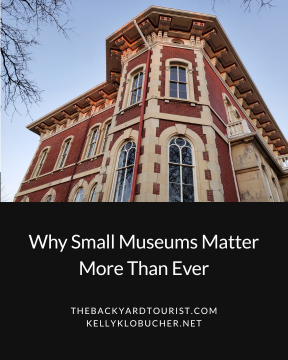
When people think about museums, they often picture massive institutions in major cities—iconic buildings, blockbuster exhibitions, and world-famous collections.
But some of the most meaningful museum experiences in America happen in much smaller places.
They happen in converted train depots, preserved homes, restored storefronts, former schools, downtown storefronts, and modest community museums run by passionate staff and volunteers determined to preserve local stories.
And increasingly, these small museums matter more than ever.
Not because they compete with larger institutions, but because they offer something many audiences are searching for: authenticity, connection, and a strong sense of place.
Small Museums Preserve Stories That Might Otherwise Disappear
Large museums often interpret broad national narratives. Small museums preserve the deeply local stories that shape communities and identity.
A railroad museum in a small Midwestern town may tell the story of industrial growth and migration. A local history museum may preserve the memory of immigrant neighborhoods, labor movements, or family businesses that once defined a region.
These stories may never appear prominently in textbooks, yet they are essential to understanding how communities evolved.
The Route 66 Association Hall of Fame & Museum in Pontiac, Illinois demonstrates how a small museum can become a cornerstone of cultural tourism. The museum preserves not only objects tied to Route 66 history, but the stories and personalities that made the road iconic.
These institutions remind visitors that history happens everywhere—not just in major cities or national landmarks.
Small Museums Create Human Connection
One of the greatest strengths of small museums is intimacy.
Visitors are often greeted by staff members or volunteers with personal ties to the community and its history. Conversations happen naturally. Stories feel immediate and personal rather than distant or abstract.
At places like the Lincoln Heritage Museum in Lincoln, Illinois or the Museum of the Grand Prairie in Mahomet, Illinois, visitors experience regional history in ways that feel deeply grounded in local life and memory.
Small museums excel at making history feel human.
Visitors may not remember every artifact they encounter, but they often remember:
- the volunteer who shared a personal story
- the recreated historic room
- the sense of belonging and authenticity
- the feeling that the museum reflected ordinary people’s lives
That emotional accessibility matters.
They Strengthen Local Economies
Small museums are also important economic drivers, particularly in small towns and rural communities.
Increasingly, cultural tourism is helping sustain local economies, and museums often serve as anchors within those tourism ecosystems. Visitors who stop at museums also support nearby restaurants, cafés, hotels, shops, and downtown districts.
Communities such as Galena, Illinois have demonstrated how preservation, museums, architecture, and storytelling can work together to create thriving tourism economies built around authenticity and heritage.
In Ottawa, Illinois, museums, public gardens, and Lincoln interpretation have become central components of the city’s revitalization efforts. Murals, preserved buildings, museums, and roadside culture together create an experience that attracts travelers from around the world.
These examples show that museums are not isolated institutions.
They are often part of larger economic and community development strategies.
Small Museums Are Often More Innovative Than We Realize
Because they frequently operate with limited budgets and small staffs, many small museums become remarkably creative and adaptable.
They experiment with:
- immersive storytelling
- family programming
- local partnerships
- community events
- digital engagement
- experiential interpretation
Without layers of bureaucracy, smaller institutions can often respond quickly to community interests and visitor expectations.
Many small museums also excel at creating highly personalized experiences that larger institutions sometimes struggle to replicate.
The rise of experiential tourism and social media storytelling may actually favor smaller institutions that feel authentic, visually interesting, and deeply tied to local identity.
Preservation, Identity, and Belonging
Small museums often become guardians of community identity during periods of rapid change.
When downtowns decline, industries disappear, or neighborhoods evolve, museums help communities preserve continuity and collective memory. They remind residents that their stories matter and deserve to be remembered.
This role is becoming increasingly important as communities across the country navigate economic shifts, population changes, and debates over identity and public memory.
Museums provide places where people can gather around shared history, difficult conversations, and cultural reflection.
That work extends far beyond tourism.
Why They Matter Now
At a time when so much of modern life feels fast, digital, and standardized, small museums offer something increasingly rare: a deeply local, human experience.
They encourage people to slow down, ask questions, and engage with communities more thoughtfully. They transform travel into understanding.
Most importantly, they remind us that history is not something distant or abstract.
It lives in small towns. In preserved buildings. In family stories. In roadside landmarks. In communities determined to remember who they are.
Small museums may not always dominate headlines or attract millions of visitors.
But they are often quietly preserving the cultural fabric of America.
And in many ways, that work has never been more important.
About Kelly Klobucher
Kelly Klobucher is a museum executive, public historian, and cultural tourism strategist with more than 20 years of experience leading museums, nonprofit organizations, and destination marketing initiatives. She writes about museum leadership, governance, public history, visitor experience, historic preservation, and heritage tourism. Kelly believes museums are among our nation’s most trusted institutions and is passionate about helping them strengthen communities through honest storytelling, exceptional service, and thoughtful leadership. She is also the creator of The Backyard Tourist, where she inspires culturally curious travelers to explore America’s museums, historic sites, and scenic backroads.
Enjoyed this article? Follow me on Medium for more insights on museum leadership, public history, governance, and heritage tourism. You can also explore my travel writing at The Backyard Tourist and learn more about my consulting work at KellyKlobucher.net.
 Kelly Klobucher | Museum Executive | Cultural Tourism Strategist | Non-Profit Leader
Leave a comment