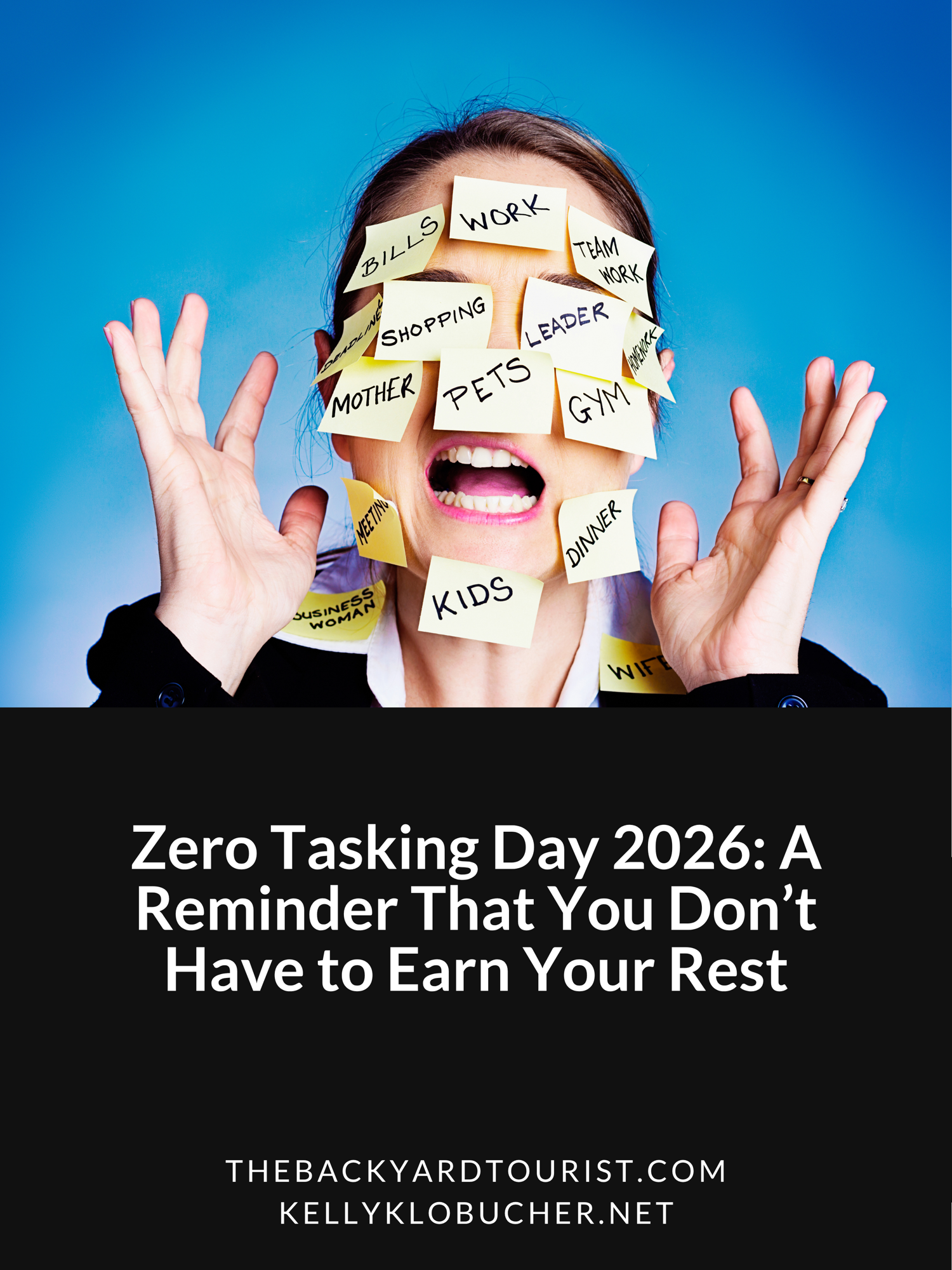
For the nonprofit professionals, women in leadership, and community champions who spend so much time taking care of everyone else.
There is a particular kind of exhaustion that comes with being the person everyone counts on.
You are the one who stays late to finish the grant application. You answer the email that arrives on Saturday morning. You step in when a colleague is overwhelmed, find a solution when a program goes sideways, and somehow remember the details everyone else has forgotten. If you lead a nonprofit, you may be responsible for the staff, the budget, the board, the donors, the community, and the mission itself.
And if you are a woman in leadership, there may be another layer: the expectation that you will be competent but approachable, decisive but accommodating, ambitious but never too ambitious, and somehow able to manage it all without letting anyone see how much it takes out of you.
When do you get to stop?
On Sunday, November 1, 2026, you have an opportunity to practice doing exactly that.
It’s Zero Tasking Day, an observance built around a wonderfully simple idea: when the clocks fall back and we gain an extra hour, we shouldn’t automatically fill it with another task.
We should keep it for ourselves.
The history behind Zero Tasking Day
Zero Tasking Day is observed on the first Sunday in November, coinciding with the end of daylight saving time in the United States. In 2026, clocks move back one hour at 2 a.m. on Sunday, November 1, returning to 1 a.m. and giving us that familiar extra hour.
Author Nancy Christie created Zero Tasking Day in 2005, inspired by the need to step back and catch her breath during a difficult period in her own life. The concept challenges our instinct to treat every available minute as an opportunity to accomplish something. Instead of using the extra hour to catch up on chores, answer emails, or get ahead on Monday’s workload, Christie encouraged people to use it to relax, recharge, and simply be.
The idea has continued to resonate because the problem it addresses hasn’t gone away. If anything, our always-connected working lives have made it harder to distinguish between being productive and being perpetually available.
Zero Tasking Day offers a small but meaningful act of resistance. It asks us to consider whether every minute needs to be useful to someone else.
What if one hour could belong entirely to you?
Why nonprofit professionals need a day like this
Nonprofit work is often deeply personal. We enter the field because we believe in something: preserving history, strengthening communities, supporting families, expanding access to education, protecting the environment, or making the world a little more equitable.
That sense of purpose is a powerful motivator. It can also make boundaries difficult.
When the mission matters, it is easy to convince yourself that one more evening, one more weekend, or one more responsibility is a reasonable sacrifice. Resources are tight. Staff members are stretched. Fundraising never really stops. Boards need answers, donors need attention, and community needs don’t neatly fit into a 40-hour workweek.
For executive directors and senior leaders, the pressure can be especially isolating. You may be the person responsible for reassuring everyone else, even when you are uncertain about the next budget cycle, worried about staffing, or carrying the emotional weight of a difficult decision.
You may not feel that you have permission to admit you’re tired.
But commitment to a mission should not require the abandonment of your own well-being.
Rest is not a reward you receive after completing every task. In leadership, there will always be another task. There will always be another problem to solve, another opportunity to pursue, or another person who needs your help.
If you wait until everything is finished before you take a break, you may never take one.
Zero Tasking Day is an opportunity to interrupt that cycle, even if only for an hour. You don’t have to earn it through exceptional performance. You don’t have to justify it by pointing to everything you’ve accomplished. You can simply take it because you are a person whose time and well-being matter.
There is another way to honor this day: give the overextended people in your life something that says, “I see how much you do, and you deserve to be cared for, too.”
A special invitation to women in leadership
Women leaders are often expected to do more than manage organizations. They are also expected to manage relationships, smooth over conflict, mentor colleagues, remember birthdays, notice when someone is struggling, and make sure everyone feels heard.
These contributions are valuable. Many are essential to healthy workplaces. But they can also become invisible labor, especially when they are treated as natural extensions of a woman’s personality rather than real work requiring time and energy.
The result is that women may find themselves carrying responsibilities that never appear in their job descriptions or performance reviews.
Zero Tasking Day is a chance to put those expectations down for a little while.
You do not have to use your extra hour to plan next year’s strategic priorities. You don’t need to turn it into a professional development exercise, listen to a leadership podcast, or read a book about becoming more effective.
You don’t even have to make the hour meaningful.
You can sit quietly with a cup of coffee. Take a nap. Read a novel. Watch the leaves move in the wind. Go for a slow walk without tracking your steps or turning it into a fitness goal.
You can do absolutely nothing and still have spent the hour well.
And if you’re a leader who worries that stepping away will let someone down, remember this: modeling healthy boundaries is part of leadership, too. You cannot build a sustainable organization by quietly teaching everyone that the most dedicated person is the one who sacrifices the most.
You can care deeply about your work without making work the entirety of your life.
How to celebrate Zero Tasking Day without turning it into another assignment
The beauty of Zero Tasking Day is that it requires almost no preparation. In fact, the less you organize, the better.
Here are a few ways to protect your extra hour.
1. Make a date with yourself.
Choose how you want to spend the hour before the weekend arrives. Put your phone on silent, close your laptop, and let the people around you know that you’re taking personal time. Don’t schedule anything else in that space.
2. Resist the urge to catch up.
The laundry can wait. So can the inbox, the grocery list, the presentation, and the stack of mail. The point is not to become more efficient with your time. The point is to experience time without a demand attached to it.
3. Choose something that feels restful to you.
Perhaps that’s a long bath, a favorite record, a walk through a garden, a good book, or a quiet afternoon with your pet. If you prefer sitting in your favorite chair and staring out the window, that counts, too.
4. Give yourself permission to be unavailable.
You don’t need to answer every notification as it arrives. Unless you have a genuine emergency or essential caregiving responsibility, let the messages wait. The world can usually manage without your immediate response for an hour.
5. Let the hour be imperfect.
Maybe you spend the first 15 minutes thinking about everything you should be doing. That’s okay. You don’t need to be an expert at relaxing. Just notice the impulse to get up and accomplish something, and give yourself permission to stay put.
6. Make it a collective act.
If you’re a nonprofit executive director, consider encouraging your team to protect an hour for themselves over the weekend. Don’t require a report about how they spent it. Don’t ask them to share a photograph of their self-care activity. Simply encourage them to take the time, without guilt.
And if you are an employee, give yourself the same permission you would readily offer a colleague.
The goal is not to do self-care correctly. It’s to stop treating yourself as an inexhaustible resource.
Don’t just celebrate Zero Tasking Day. Celebrate the people who do too much.
Think about the person who always organizes the fundraiser, stays after the event to clean up, mentors new employees, or quietly makes sure the organization keeps moving. Perhaps it’s your boss, a colleague who consistently goes the extra mile, an executive director at a local nonprofit, or a community volunteer who never seems to say no.
Instead of giving that person another mug with an inspirational slogan about hard work, consider a gift that encourages them to slow down.
Gift ideas for the person who does too much
Give them an experience that doesn’t require planning.
- A gift certificate for a massage, facial, or spa treatment.
- Tickets to a museum, garden, historic site, concert, or theater performance they can enjoy at their own pace.
- A gift card to a favorite independent bookstore or local coffee shop.
- An afternoon tea, a leisurely lunch, or a reservation at a restaurant they have wanted to try.
- A membership to a botanical garden, museum, or cultural institution where they can spend time simply enjoying something beautiful.
Give them permission to be comfortable.
- A soft throw blanket, cozy slippers, or a luxurious pair of pajamas.
- A beautiful journal and a good pen for personal reflection, not work planning.
- A collection of excellent teas, locally roasted coffee, or their favorite treats.
- A book chosen purely for pleasure rather than professional improvement.
- A candle, bath products, or a small comfort basket tailored to what they actually enjoy.
Give them the gift of time.
- Offer to handle a practical responsibility so they can take an afternoon off.
- Arrange a meal delivery or prepare dinner for them.
- If you are a colleague, offer to cover a specific task during a particularly busy week.
- If you are on a nonprofit board, ask what would genuinely lighten your executive director’s workload, then follow through.
- Give a volunteer a genuine break by arranging for someone else to take their next shift.
Sometimes the most meaningful gift is not an object. It is the removal of one more obligation.
Give a gift that supports a local nonprofit.
For the community leader who spends their life helping others, consider making a donation in their honor to a cause they care about. You might also purchase a gift certificate from a locally owned business, buy tickets to a nonprofit’s cultural event, or give a membership to an organization whose mission they love.
The key is to make the gesture personal. A donation should reflect their interests, not simply become another way of asking them to support a cause.
And remember: a self-care gift should not come with an expectation that the recipient will use it to become a more productive employee. The point is to celebrate them as a person, not to improve their output.
The most important gift: acknowledge what they’ve accomplished
We often move directly from one milestone to the next without stopping to appreciate what it took to get there.
A successful fundraiser ends, and planning for the next one begins. An exhibition opens, and the team immediately turns to the next project. A grant is awarded, and the attention shifts to the next deadline. A nonprofit navigates a difficult year, and everyone moves on without acknowledging the leadership and resilience that carried it through.
The same thing happens to individuals. The person who consistently delivers becomes known for delivering. Their extraordinary effort gradually becomes the baseline expectation.
This Zero Tasking Day, take a moment to interrupt that pattern.
If you supervise someone who has gone above and beyond, tell them specifically what you appreciate. Don’t limit your recognition to a generic “great job.” Tell them how their work made a difference.
If you serve on a nonprofit board, acknowledge your executive director’s leadership, especially the work that may not be visible to the public. Ask what they are proud of accomplishing this year. Listen to the answer without immediately moving into a discussion of next year’s goals.
If you are a colleague, recognize the person who makes your work easier, supports the team, or steps in when things get difficult.
And if you are the person who has been doing too much, take a moment to recognize yourself.
Think about the challenges you navigated, the people you helped, the projects you completed, and the things you learned. Consider the progress you made that may not have resulted in an award, a promotion, a larger budget, or public recognition.
Not every accomplishment is measurable. Not every contribution appears in an annual report.
You can be proud of the work you have done without immediately turning that pride into a demand to do more.
About the Author
Kelly Klobucher is a museum executive, public historian, and creator of The Backyard Tourist, where she explores museums, historic sites, and unforgettable road trips across the Midwest and beyond. With more than 20 years of experience in museum leadership, marketing, and nonprofit management, she writes about history, heritage tourism, museum leadership, and the stories that connect people to place. Follow her on Medium for thoughtful perspectives on museums, preservation, and cultural travel—and discover more adventures at The Backyard Tourist.


Leave a Reply