History Without the Handling: What Hampton Court Palace Can Teach Museums About Bringing the Past to Life
What if visitors could get up close to historic clothing, uniforms, and furnishings without putting a single original artifact at risk? Hampton Court Palace offers an intriguing answer.
There is an ongoing challenge in the museum world: How do we make history tangible?
Visitors want to experience history, not simply read about it. They want to understand what people wore, how they lived, what their homes looked like, and what it might have felt like to walk through a royal court or stand in a military barracks.
Unfortunately, the very objects that help tell those stories are often among the most fragile things in a museum.
Historic textiles are particularly vulnerable. Light, humidity, dust, handling, and gravity can all contribute to deterioration. An eighteenth-century military uniform or a Tudor gown may look perfectly sturdy behind glass, but centuries of age can make the original fabric remarkably fragile.
At Hampton Court Palace in England, an inventive interpretive approach demonstrates how museums can bridge that gap between preservation and visitor engagement.
The solution? A little polyethylene.
A Different Kind of Historic Costume
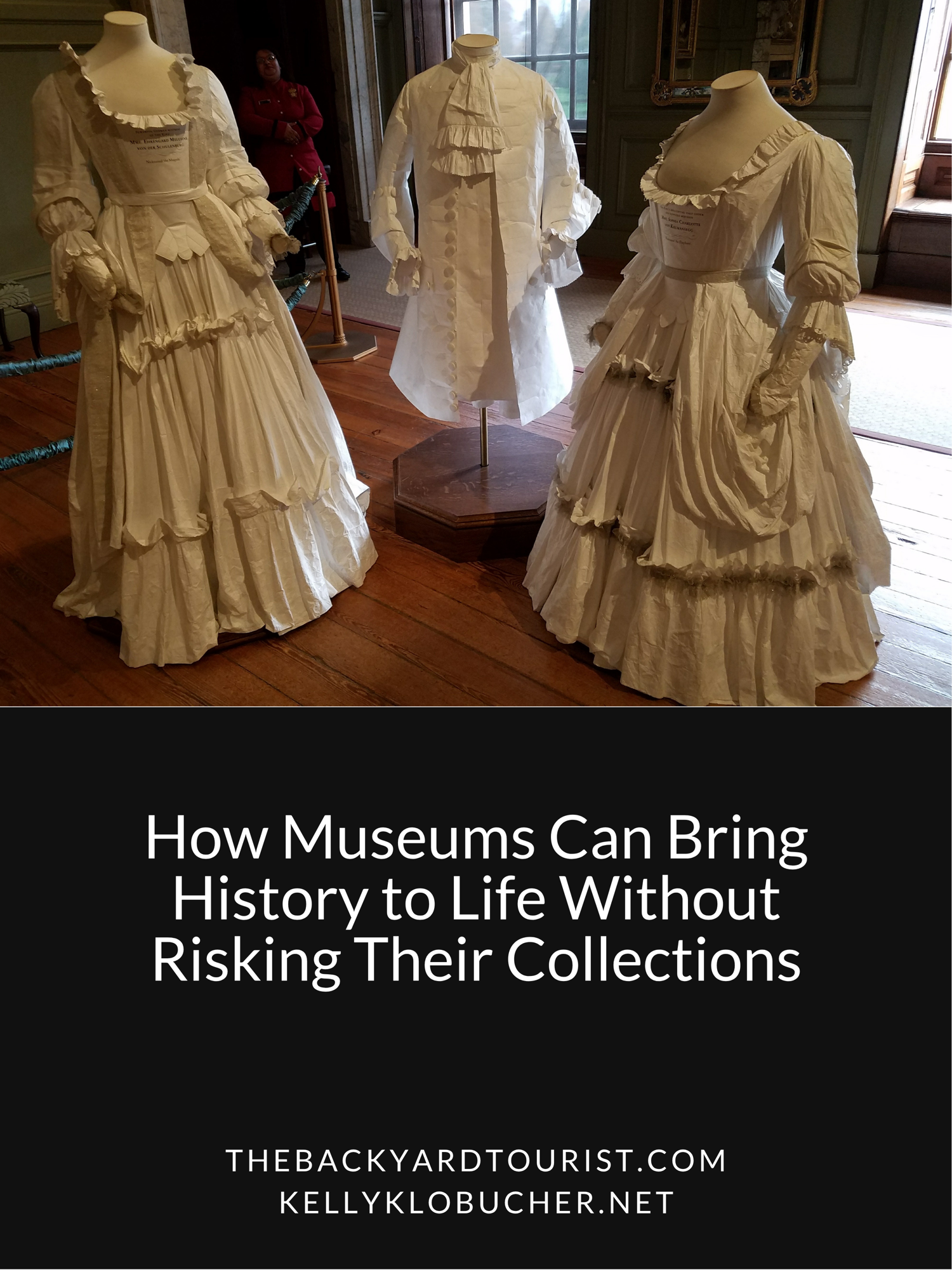
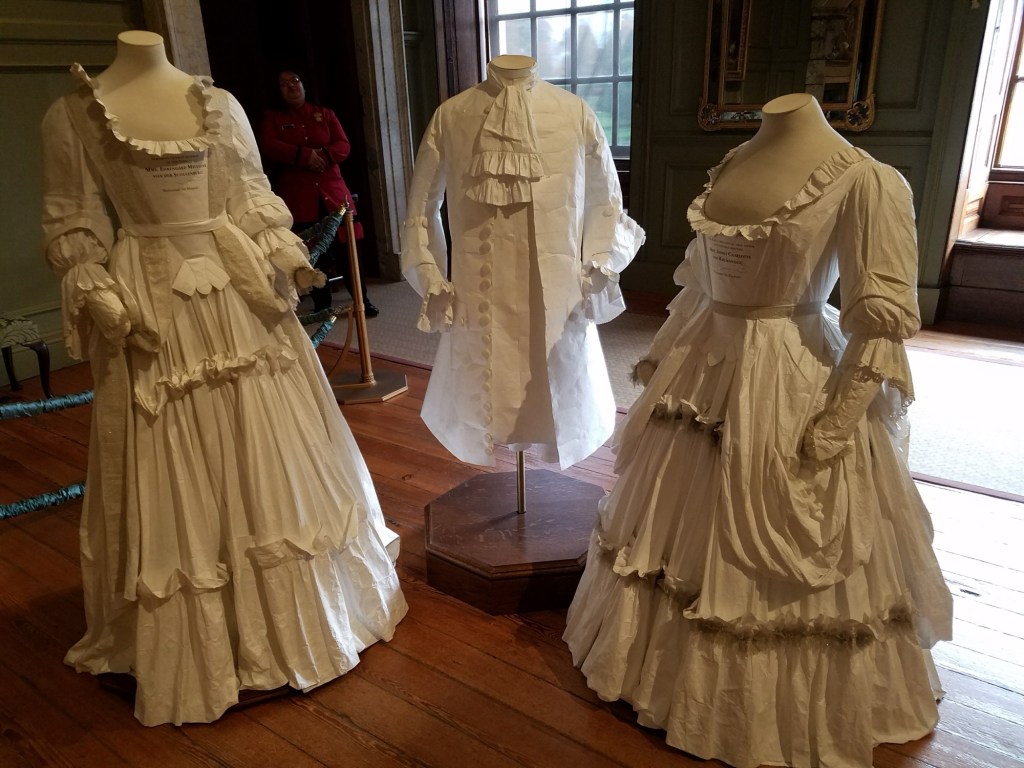
During an interpretive installation at Hampton Court Palace, mannequins dressed in reproductions made from Tyvek were used to help visitors imagine how historic rooms might have looked when they were occupied.
Tyvek is a synthetic, nonwoven material made from flash-spun high-density polyethylene fibers. You may recognize it as the durable white material commonly used as a protective building wrap during construction.
It isn’t exactly what comes to mind when imagining royal court fashion.
But its characteristics make it an interesting material for museum interpretation. It is lightweight, durable, relatively easy to cut and sew, and can be used to create three-dimensional forms resembling historic clothing.
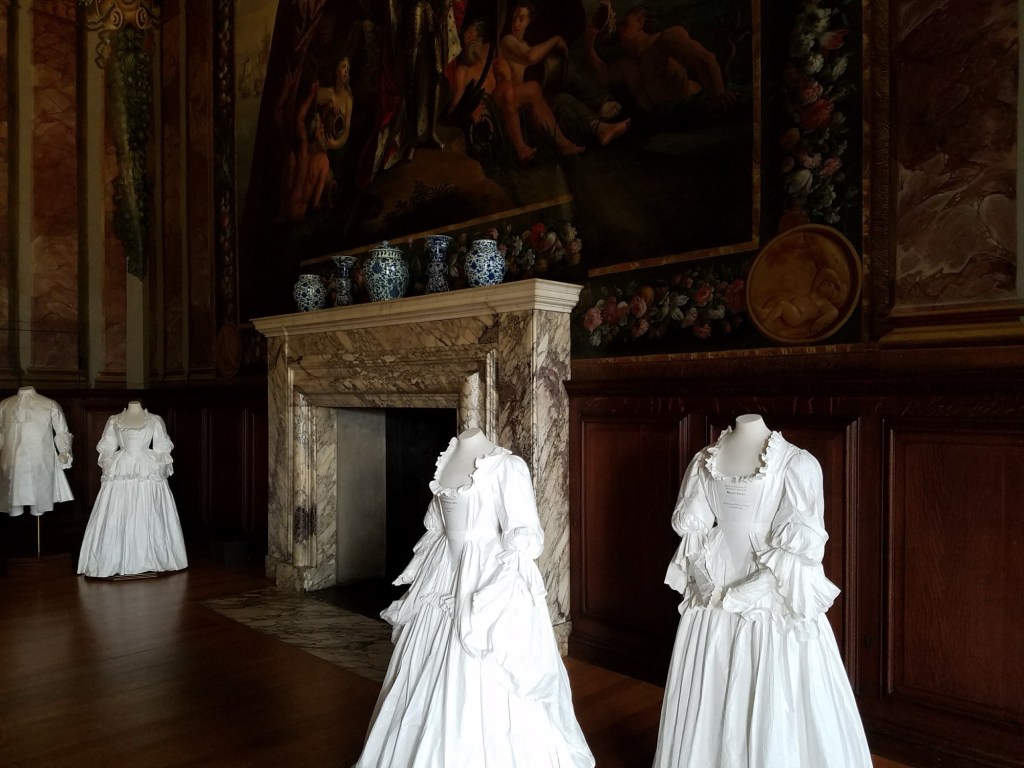
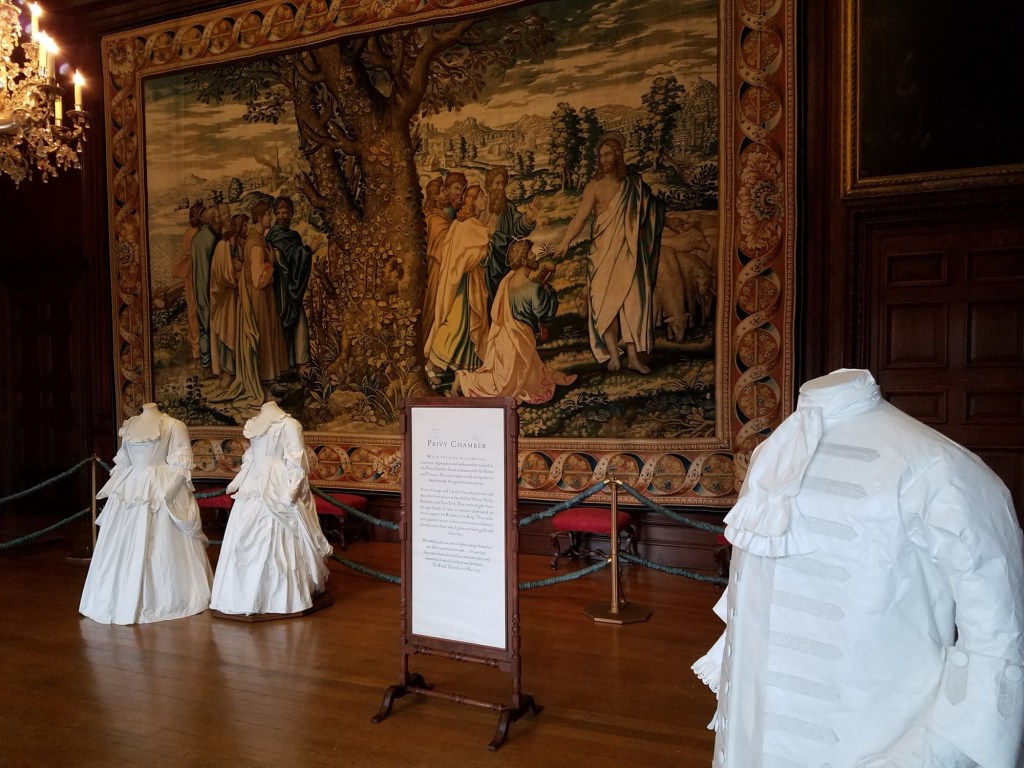
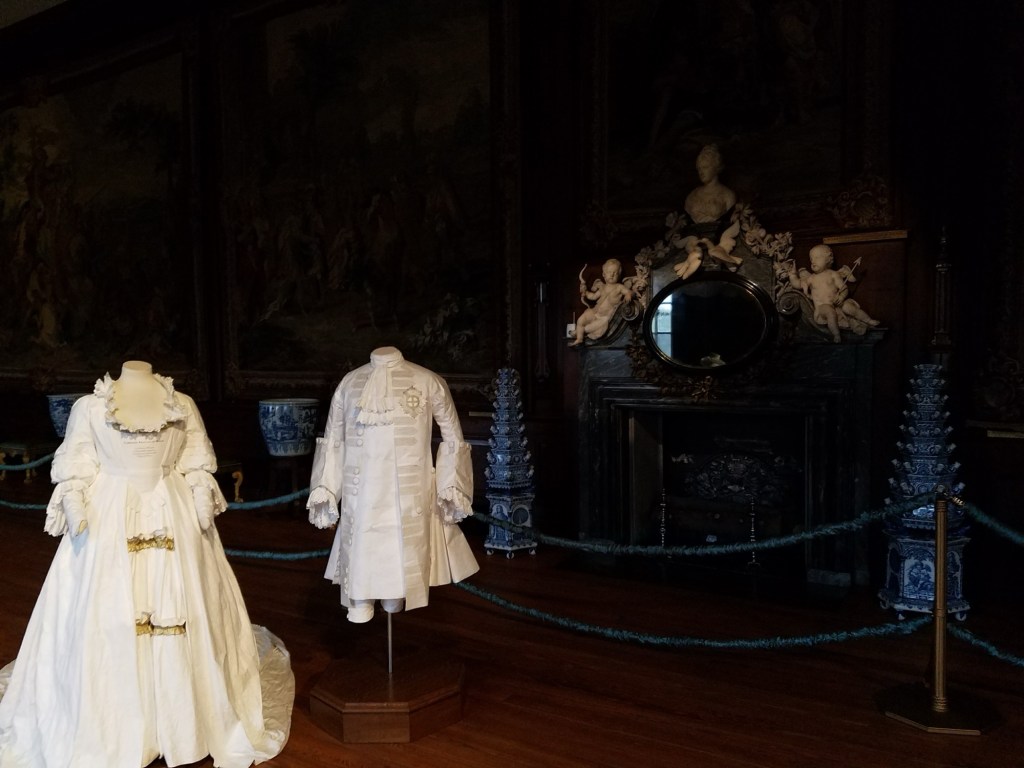
At Hampton Court, the Tyvek-clad mannequins were installed in the Privy Chamber. Rather than simply placing traditional mannequins behind barriers, the installation allowed visitors to move freely through the space.
Even more interestingly, printed historic textile designs from the Victoria and Albert Museum’s collection were projected onto the white Tyvek forms.
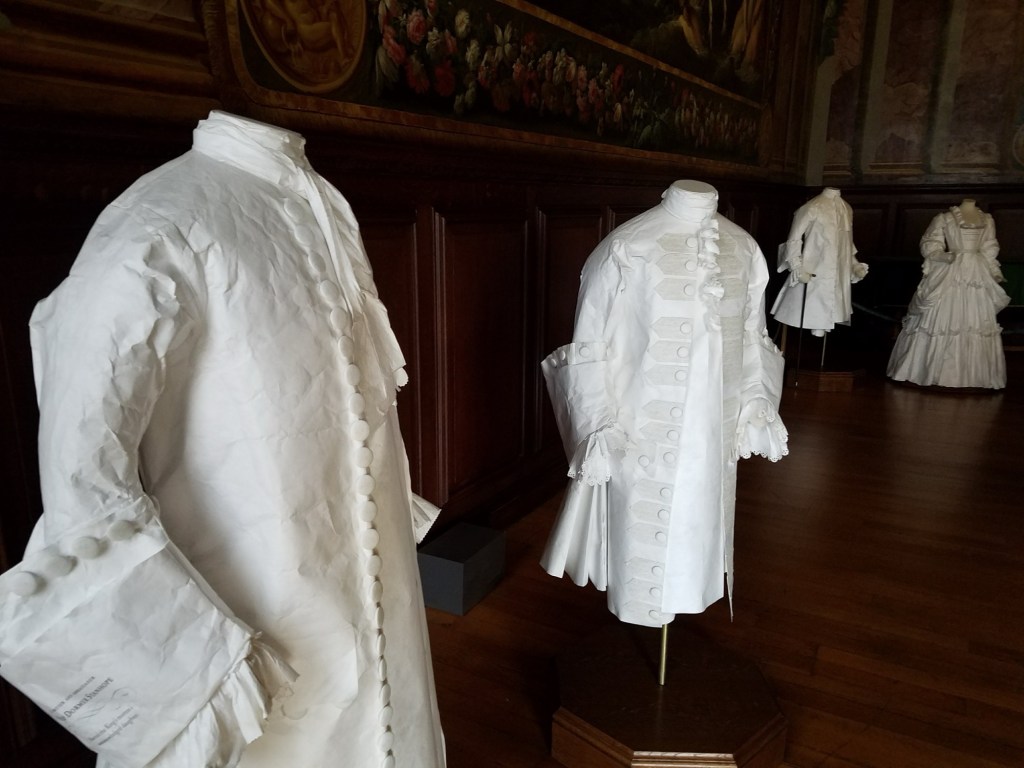
The result was an imaginative combination of costume reproduction, historic interiors, and projection technology.
Instead of looking at a collection of costumes through glass, visitors could experience the visual impact of clothing within the architectural setting for which it was intended.
The white forms provided the silhouettes. The projected patterns supplied the visual richness.
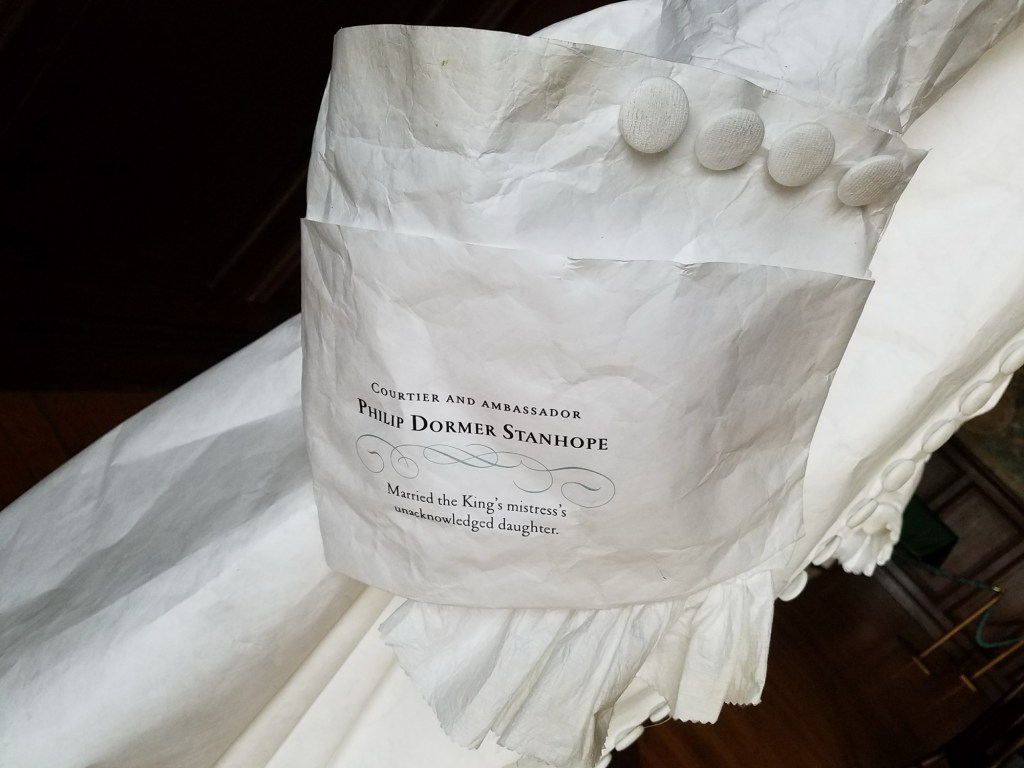
It was an inventive way to communicate the presence and appearance of people in a historic room without requiring original garments to be displayed.
A related project at Shakespeare’s New Place in Stratford-upon-Avon also used Tyvek to create historic costume reproductions. The material’s durability, cleanability, and ease of construction made it particularly useful for exhibition purposes.
This is an important distinction: the goal isn’t to replace original artifacts. It is to create interpretive alternatives that allow original objects to remain protected.
Why This Matters for Historic Sites
Museums and historic houses frequently face a difficult balancing act.
We want visitors to feel connected to the past, but we also have a responsibility to protect the physical evidence of that past.
Consider the traditional approach to displaying historic clothing.
A garment is mounted on a mannequin, placed inside a case, carefully lit, and accompanied by an interpretive label. Visitors can admire the workmanship, examine the details, and read about its former owner.
But what if the visitor wants to understand how the garment actually functioned?
How heavy was it? How did the sleeves move? What did the silhouette look like when someone walked into a room? How did a uniform communicate rank or authority?
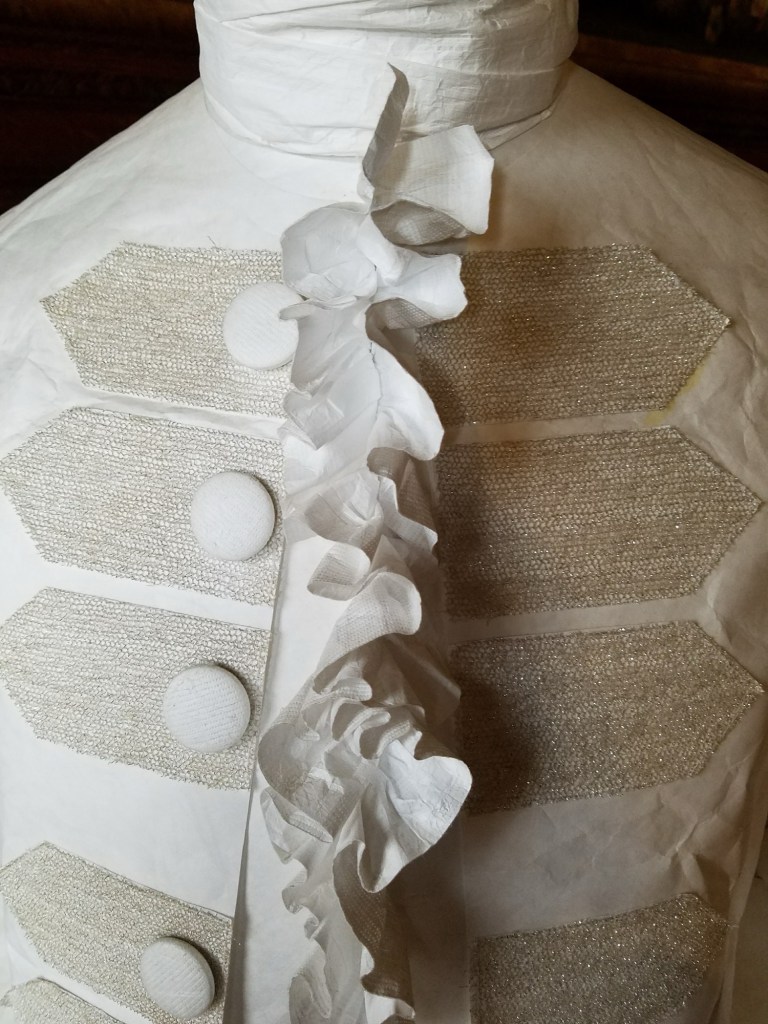
A photograph or label can only accomplish so much.
Reproductions provide another opportunity. They allow museums to communicate scale, construction, silhouette, and visual impact without exposing original collections to additional risks.
And the possibilities extend well beyond royal clothing.
Five Ways Museums Can Adapt the Idea
The interesting thing about the Hampton Court approach is that it doesn’t require every institution to have a royal collection, a large conservation department, or an extensive exhibition budget.
Smaller historic sites can adapt the underlying concept to tell their own stories.
1. Recreate Historic Clothing and Uniforms
Think about the interpretive possibilities at a military museum, historic courthouse, railroad museum, or industrial heritage site.
A reproduction made from Tyvek or another appropriate lightweight material could represent:
- A Civil War military uniform.
- A railroad conductor’s or engineer’s uniform.
- A nineteenth-century shopkeeper’s dress.
- A police or fire department uniform.
- An early twentieth-century factory worker’s clothing.
Mannequins could be positioned in historically appropriate locations, helping visitors visualize how people occupied and used a space.
A railroad museum, for example, might use a reproduction conductor’s uniform to help interpret the role of railroad employees without exposing an original uniform to unnecessary light or handling.
2. Recreate Historic Interiors
The same principle can be applied to furnishings and decorative elements.
Imagine a historic house where the original curtains, upholstery, or wall coverings have deteriorated or cannot safely be displayed.
Lightweight reproduction materials could help recreate the appearance of a furnished room.
Printed fabric, projection mapping, and carefully designed replicas could communicate the colors, patterns, and textures that once defined the space.
The visitor gets a better sense of the original environment, while the authentic materials remain protected.
3. Use Projection Mapping to Add Historical Detail
The projection element at Hampton Court is particularly interesting.
Rather than manufacturing an entirely finished reproduction, museums could use relatively simple white forms as a canvas for projected imagery.
Historic textile patterns, insignia, decorative details, and even changing designs could be projected onto mannequins or other exhibition forms.
This creates opportunities for storytelling.
A military uniform might change visually to demonstrate the evolution of insignia. A dress form might illustrate how fashion changed across several decades. A historic room might show successive wallpaper patterns or decorative schemes.
The physical reproduction provides the shape; digital interpretation supplies the detail.
4. Create Touchable Interpretive Experiences
There is another opportunity here, particularly for museums interested in accessibility and multisensory learning.
Although the Hampton Court installation was designed to let visitors move freely around the reproductions, other institutions could develop separate, purpose-built handling examples.
A reproduction sleeve, textile sample, hat, or uniform component could be made available for supervised handling.
Visitors could examine construction, compare materials, and better understand the practical realities of historic clothing.
This is especially valuable for children, school groups, and visitors who learn through tactile experiences.
The important conservation distinction is that handling pieces should be designed specifically for that purpose, rather than assuming every replica material is automatically suitable for unrestricted touching.
5. Make Empty Historic Spaces Feel Occupied
Perhaps the greatest opportunity is using reproductions to restore a sense of human presence.
Many historic sites have rooms that are architecturally significant but visually empty. The original furniture may have been sold, dispersed, damaged, or moved into collections storage.
Mannequins, lightweight costume reproductions, projected imagery, and carefully selected replica furnishings can help visitors imagine the people who once occupied those spaces.
A historic prison could show the clothing of an incarcerated person or a prison guard. A former general store could recreate the appearance of a shopkeeper behind the counter. A historic home could suggest the presence of a family gathered around the dining table.
The objective isn’t to create a movie set. It is to help visitors understand the human activity that gave a building its purpose.
A Practical Starting Point for Smaller Museums
For institutions interested in experimenting with this approach, I would start with one interpretive problem rather than an entire exhibition.
Ask a few questions:
- What story are visitors having difficulty understanding?
- Is there an original artifact that is too fragile, valuable, or light-sensitive for extended display?
- Could a reproduction communicate the same information?
- Would a three-dimensional form be more effective than a photograph?
- Could projection or digital imagery add detail without requiring an expensive reproduction?
- Is there an opportunity to create a separate handling example?
Tyvek is one possible material, not a universal solution. Museums should consult conservators, exhibit designers, and costume professionals before selecting materials. Reproductions must be stable, safe for their intended environment, and appropriate for the type of interaction being planned.
There are also practical considerations: mounting, fire safety, cleaning, storage, accessibility, and long-term maintenance.
But this doesn’t necessarily have to be an expensive undertaking. A small pilot project, developed in partnership with a local theater costume department, university textile program, or design school, could be a good starting point.
Museums might even find opportunities to collaborate with local artists and makers.
Preservation and Engagement Are Not Opposing Goals
One of the recurring conversations in the museum profession is how to make historic places more engaging without compromising their authenticity.
Sometimes we approach preservation and visitor experience as competing priorities.
They don’t have to be.
The Hampton Court example is a reminder that thoughtful interpretation can give visitors more opportunities to experience history while reducing pressure on original collections.
It also challenges us to think beyond the traditional glass case.
What if the most effective way to interpret an artifact isn’t necessarily to display the artifact itself?
What if we use a reproduction to communicate its scale, appearance, and function, while the original receives the conservation care it deserves?
For smaller museums, this is an especially useful idea. We may not have the resources of a royal palace, but we do have stories worth telling, collections worth protecting, and visitors who deserve meaningful experiences.
Sometimes innovation isn’t about acquiring another expensive interactive screen or installing the latest technology.
Sometimes it is about looking at an ordinary construction material and asking an extraordinary question:
What else could we do with this to bring history to life?
And if a little polyethylene can help visitors imagine life at the Tudor court, perhaps it’s time more museums started thinking outside the display case.
Kelly Klobucher is a Museum Executive who writes about new ideas and best practices at museums and historic sites. The Backyard Tourist explores museums, historic places, architecture, and the stories that make the scenic route worth taking. Because history is always more interesting when you get a little closer to it.


Leave a Reply